
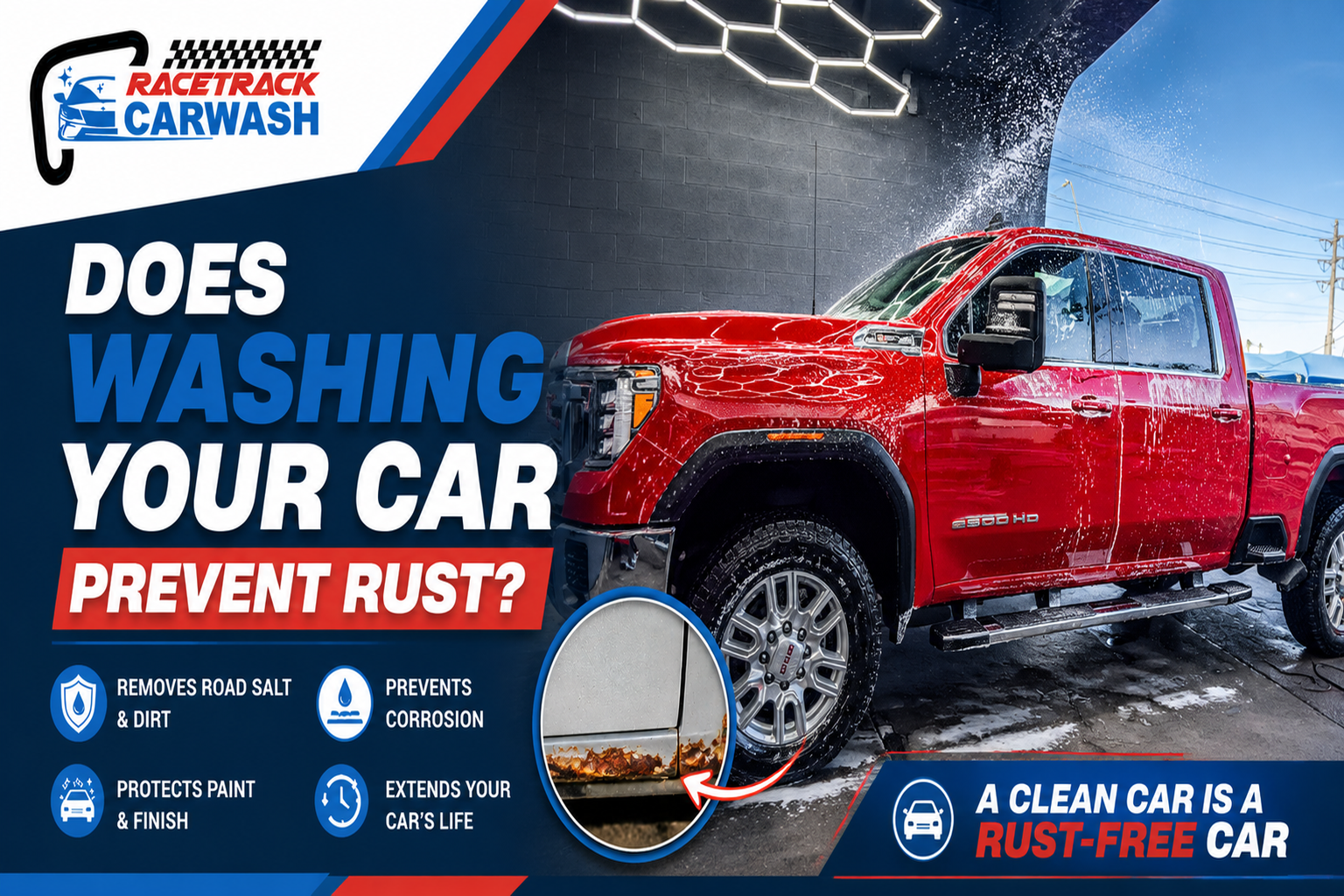
Yes, regular car washing can help prevent rust, but it cannot guarantee that your vehicle will never rust. Washing removes road salt, mud, dirt, and other contaminants that can hold moisture against metal surfaces. This is especially important during winter and in coastal areas, where salt and moisture can accelerate corrosion.
Rust begins when iron or steel reacts with oxygen and moisture. Contaminants such as road salt can make that process happen faster. Keeping those contaminants off your vehicle is therefore an important part of rust prevention.
How Does Washing a Car Help Prevent Rust?
A vehicle constantly encounters substances that can contribute to corrosion. Some may seem harmless, but leaving them on the car for extended periods can create problems.
Regular washing helps by:
- Removing road salt and de-icing chemicals
- Clearing mud and dirt from wheel wells
- Washing away moisture-trapping grime
- Reducing buildup underneath the vehicle
- Removing bird droppings and other contaminants
- Helping protect the paint and clear coat
The undercarriage deserves particular attention. It contains metal components that are exposed to road spray but are easy to overlook during a normal driveway wash.
Why Is Road Salt So Bad for Your Car?
Road salt is particularly aggressive because it can speed up the corrosion process when moisture is present. During winter, salt can accumulate around wheel wells, suspension components, brake parts, and the underside of the vehicle.
If you regularly drive on salted roads, don’t wait until your vehicle looks dirty before washing it. A rinse that removes salt buildup can be much more valuable than simply keeping the exterior shiny.
How Often Should You Wash Your Car to Prevent Rust?
There is no single schedule that works for every driver. Your washing frequency should depend on where and how you drive.
For most drivers, washing approximately every two weeks is a reasonable starting point. However, consider washing weekly or soon after exposure to contaminants if you:
- Drive on heavily salted roads
- Live near the coast
- Frequently drive through mud or standing water
- Park outdoors under trees
- Drive long distances every day
- Have recently driven through snow or slush
For more guidance, see our related article, “How Often Should You Wash Your Car? A Complete Seasonal Guide for Every Driver.”
Should You Wash Your Car After Winter Driving?
Yes. Winter is one of the most important times to keep up with regular vehicle washing.
Snow, slush, road salt, and de-icing chemicals can accumulate underneath your vehicle and around the wheels. Once temperatures rise and moisture remains trapped around metal components, corrosion can become a bigger concern.
Whenever possible, choose a wash that includes thorough cleaning of the lower body and undercarriage.
For more winter-specific advice, read “Winter Car Care: Why Regular Car Washes Are Crucial in Cold Weather.”
Can Washing a Car Remove Existing Rust?
No. A normal car wash does not remove established rust.
Washing is primarily a preventive maintenance step. Surface dirt and contaminants can be removed, but rust that has already formed may require sanding, rust treatment, paint repair, replacement of damaged parts, or professional bodywork depending on its severity.
If you notice bubbling paint, orange-brown spots, flaking metal, or corrosion around wheel arches, doors, or the underside of your vehicle, don’t assume another wash will solve the problem.
Is a Professional Car Wash Better for Rust Prevention?
A professional wash can make routine maintenance easier because the cleaning process is designed to remove contaminants efficiently and consistently.
The most important factor isn’t simply whether you wash at home or use a professional facility. What matters is how thoroughly contaminants are removed and how frequently you clean the vehicle.
If you’re comparing different washing methods, our guide “Touchless Car Wash vs Soft Cloth Car Wash: Which Is Better?” can help you understand the differences between common wash techniques.
What Else Can You Do to Prevent Car Rust?
Washing is only one part of a good corrosion-prevention routine.
Follow these practical steps:
- Wash regularly, especially after exposure to road salt.
- Clean the undercarriage when driving conditions are harsh.
- Inspect paint chips and scratches before they become larger problems.
- Remove bird droppings and tree sap quickly.
- Keep drainage areas clear so moisture does not remain trapped.
- Consider paint protection to help protect the exterior finish.
- Address visible rust early instead of allowing it to spread.
The Bottom Line:
Does washing your car prevent rust? It can substantially reduce the risk by removing road salt, dirt, moisture, and other contaminants that contribute to corrosion. Regular washing is particularly important during winter and whenever your vehicle is exposed to salty roads or coastal conditions.
A consistent car-care routine protects more than your vehicle’s appearance. By keeping corrosive materials off the body and undercarriage, you can help preserve the finish, slow corrosion, and maintain your vehicle for longer.
Frequently Asked Questions
For many drivers, washing every two weeks is a good baseline. If you regularly encounter road salt, snow, coastal air, mud, or heavy grime, washing weekly or shortly after exposure is better. The goal is to remove corrosive contaminants before they remain on the vehicle long enough to contribute to corrosion.
Yes. Winter washing is particularly useful because road salt and de-icing chemicals can accumulate underneath the vehicle and around the wheels. Washing helps remove these contaminants before they remain in contact with metal surfaces for extended periods. An undercarriage rinse is especially useful after driving on heavily salted roads.
Rain itself is not usually the primary cause of automotive rust. The greater concern is prolonged moisture combined with exposed or damaged metal and contaminants such as road salt. Rain can also leave dirt and pollutants behind as it dries. Regular washing helps remove that residue and keeps the vehicle cleaner.
It can help significantly. The underside is exposed to road salt, mud, water, and other contaminants that can accumulate in hard-to-see areas. Cleaning the undercarriage helps remove this buildup. It is especially important during winter or after driving through roads treated with salt or de-icing chemicals.
Generally, regular washing is not harmful when appropriate vehicle-safe products and proper washing methods are used. In fact, frequent cleaning can be beneficial when your car is exposed to corrosive materials. The bigger concern is using poor-quality equipment or aggressive washing techniques that can unnecessarily damage the paint.
A standard car wash can remove dirt, salt, and other surface contaminants, but it generally cannot remove established rust. Existing corrosion may require specialized treatment or body repair. If rust has caused bubbling paint, flaking metal, or visible structural damage, have the affected area inspected rather than relying on routine washing.
The best approach is consistent preventive maintenance. Wash your vehicle regularly, remove road salt promptly, clean the undercarriage when necessary, repair paint chips and scratches, and inspect areas where moisture and dirt collect. Catching early signs of corrosion can also prevent a relatively small problem from becoming expensive bodywork.
If you’re looking for a convenient way to keep your vehicle clean and protected, visit Racetrack Car Wash for professional car-wash services in Manhasset.
Leave a Reply