
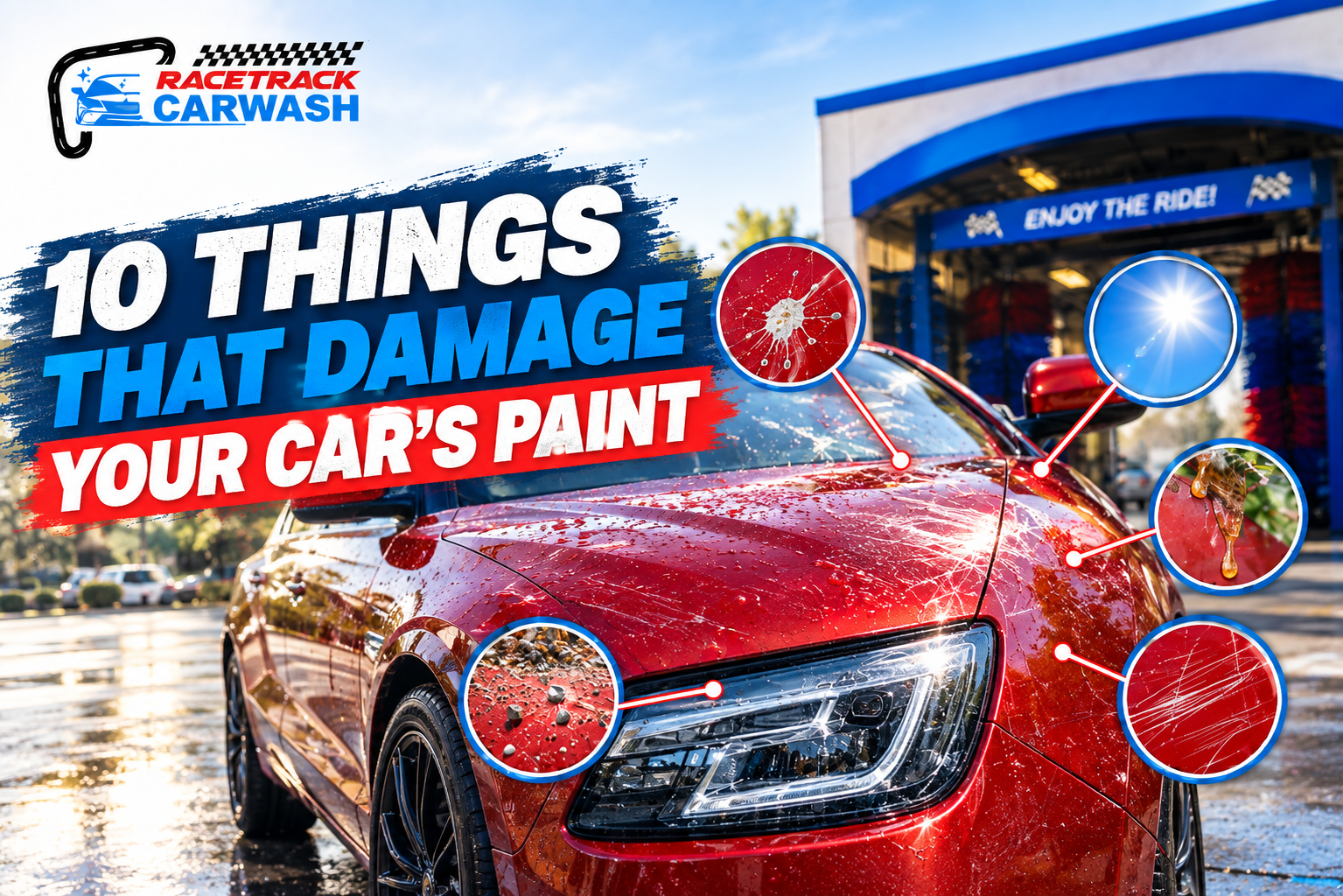
10 Things That Damage Your Car’s Paint
A car’s paint does more than make it look good. The clear coat and paint system help protect the body panels underneath from everyday environmental exposure. In Manhasset, NY, your vehicle can face road salt, bird droppings, tree sap, UV exposure, rain, dirt, and other contaminants that gradually affect the finish.
Quick answer:
The most common things that damage car paint include bird droppings, tree sap, road salt, UV rays, brake dust, road grime, harsh chemicals, improper washing, gasoline spills, and scratches. Removing contaminants quickly and using proper washing techniques can help protect your clear coat and keep your vehicle looking its best.
What Are the 10 Things That Damage Car Paint?
1. Bird Droppings
Bird droppings are more than an unpleasant mess. They can contain acidic compounds that may stain or etch the clear coat when left on the surface, especially during warm, sunny weather.
If you notice bird droppings on your vehicle, remove them as soon as practical. Avoid aggressively rubbing a dry spot because trapped debris can scratch the finish.
2. Tree Sap
Parking beneath trees provides shade, but it can also expose your vehicle to sticky sap. Tree sap can bond to the paint and become increasingly difficult to remove if it is allowed to sit for an extended period.
Don’t scrape hardened sap with a sharp object. Use an appropriate automotive cleaning product or have a professional remove stubborn contamination.
3. Road Salt
Winter driving around Long Island can expose your vehicle to road salt and other deicing materials. Salt and moisture can contribute to corrosion, particularly when contaminants accumulate around the vehicle.
Regular washing during and after winter helps remove salt before it has an opportunity to remain on the vehicle for long periods.
4. UV Rays and Sun Exposure
Constant sunlight can gradually oxidize automotive paint. Oxidation is a chemical reaction that can make a finish look dull, faded, or chalky over time.
Parking in a garage or shaded location when practical and maintaining the exterior regularly can help reduce unnecessary exposure.
5. Brake Dust
Brake dust contains particles generated through braking and can accumulate heavily around wheels. If left on surfaces for extended periods, contamination can become difficult to remove.
Wheel cleaning should be part of your regular vehicle-care routine rather than something you only do when the wheels look extremely dirty.
6. Road Grime and Dirt
Everyday road grime contains more than simple dust. It can include oils, dirt, pollutants, and other particles that settle onto the vehicle.
The longer contamination remains on the paint, the greater the opportunity for it to bond to the surface. Regular washing helps keep buildup under control.
7. Improper Washing
Believe it or not, washing your car incorrectly can damage its paint.
Using dirty towels, abrasive materials, household detergents, or aggressive scrubbing can introduce fine scratches and swirl marks. Proper automotive products, clean washing materials, and appropriate drying techniques are important for maintaining a healthy finish.
8. Gasoline and Fuel Spills
Gasoline can affect automotive finishes if spilled and left on the paint. When fueling, take care to avoid splashing fuel onto painted surfaces.
If a spill occurs, rinse and clean the affected area promptly rather than allowing the residue to remain.
9. Harsh Chemicals
Not every cleaning product is designed for automotive paint. Strong household cleaners or improperly diluted chemicals may affect the finish, especially with repeated use.
Stick with products specifically formulated for vehicle exteriors, particularly when cleaning sensitive or valuable finishes.
10. Scratches and Abrasive Contact
Keys, branches, shopping carts, dirty wash mitts, and other abrasive objects can scratch the clear coat. Even small scratches can become more noticeable under direct sunlight.
If your vehicle already has visible scratches or paint imperfections, a professional detailing assessment can help determine whether cleaning, polishing, or paint correction is appropriate.
How Can You Protect Your Car’s Paint?
The simplest approach is consistent, gentle maintenance. You don’t need to wait until your vehicle looks extremely dirty before washing it.
A practical routine includes:
- Wash regularly based on driving and weather conditions.
- Remove bird droppings and tree sap promptly.
- Wash away road salt during winter.
- Avoid household detergents and abrasive cleaning materials.
- Use clean microfiber towels and proper automotive products.
- Dry the vehicle carefully instead of allowing heavy water spots to remain.
- Consider professional detailing when contamination or paint imperfections become difficult to manage.
For more information about maintaining your vehicle’s condition, see our guide on Can a Dirty Car Reduce Its Resale Value?
When Should You Get Professional Car Care?
If washing no longer restores the appearance of your paint, don’t simply scrub harder. Stubborn tree sap, embedded contaminants, oxidation, scratches, and dull paint may require more specialized treatment.
Racetrack Car Wash provides car washing and auto detailing services in Manhasset, including exterior and interior care. You can visit the Racetrack Car Wash to review the available options.
For more extensive cleaning and paint-care needs, use the site’s Auto Detailing service option rather than treating heavily contaminated paint like a routine wash.
What Is the Best Way to Prevent Car Paint Damage?
There isn’t one product that prevents every type of paint damage. The most effective strategy is regular cleaning combined with careful handling.
For drivers in Manhasset, this is particularly important during winter and periods when pollen, road grime, salt, rain, and other contaminants accumulate on the vehicle. Regular professional washing can make that maintenance easier to keep up with.
Pros and Cons of Regular Professional Car Washing
| Pros | Cons |
|---|---|
| Removes damaging surface contaminants | Requires regular visits |
| Helps maintain the vehicle’s appearance | Adds an ongoing maintenance cost |
| Helps remove road salt and grime | Does not repair existing scratches |
| Reduces buildup of bird droppings and other contaminants | Severe paint defects may need detailing |
| Convenient for busy drivers | Proper service selection still matters |
Conclusion: How Do You Prevent Car Paint Damage?
Understanding the 10 things that damage car paint makes vehicle maintenance much easier. Bird droppings, tree sap, road salt, UV rays, brake dust, road grime, harsh chemicals, improper washing, fuel spills, and scratches can all affect your vehicle’s finish.
The best approach is simple: wash regularly, remove contaminants promptly, use proper products, and seek professional detailing when ordinary washing is no longer enough. For Manhasset drivers, consistent exterior care can help keep a vehicle cleaner, better presented, and easier to maintain over time.
Frequently Asked Questions
Common causes include prolonged exposure to bird droppings, tree sap, road salt, UV rays, road grime, harsh chemicals, and abrasive washing. The severity depends on how long the contaminant remains on the surface and the condition of the vehicle’s clear coat. Prompt cleaning and proper washing techniques can reduce unnecessary exposure.
Yes, bird droppings can stain or etch automotive paint if they remain on the surface for too long. Heat and sunlight can make the problem worse. If you notice bird droppings on your vehicle, remove them promptly using an appropriate automotive cleaning method rather than scraping or aggressively rubbing the dried material.
Road salt can contribute to corrosion and may affect the vehicle’s exterior when combined with moisture and prolonged exposure. Regular washing during winter helps remove salt, road grime, and other contaminants. Pay particular attention to lower body panels and areas where road spray tends to accumulate.
Tree sap can stick strongly to automotive paint and become difficult to remove when exposed to heat and sunlight. Leaving it on the surface for extended periods can contribute to staining or finish damage. Avoid scraping it with sharp objects. Use an automotive-safe product or professional cleaning service for stubborn sap.
Frequent washing itself does not necessarily damage automotive paint. The bigger concern is how the vehicle is washed. Dirty towels, abrasive materials, harsh chemicals, and aggressive scrubbing can create fine scratches. Using appropriate automotive products and clean washing materials is more important than simply limiting the number of washes.
If you’re looking for a convenient way to keep your vehicle clean and protected, visit Racetrack Car Wash for professional car-wash services in Manhasset.
Leave a Reply